





















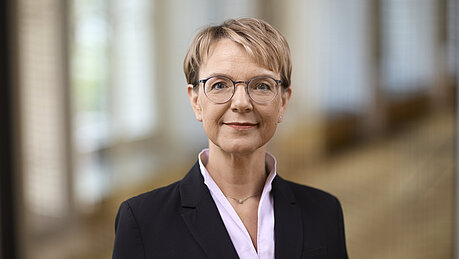

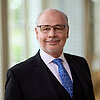

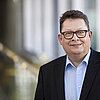



Federal Minister of Health Nina Warken at the World Health Assembly in Geneva
Federal Minister of Health Nina Warken took part in the 79th World Health Assembly (WHA) in Geneva on 17 and 18 May. The WHA is the decision-making body of the World Health Organization (WHO), with almost 200 member states attending.

© Copyright: BMG/Juliane Sonntag (photothek)
Bundesgesundheitsministerin Nina Warken und WHO-Direktor Tedros bei der WHA-Versammlung in Genf
The core topic at the Assembly remains the need for reform so that WHO is empowered to act, especially within the context of the US withdrawal. In order to maintain WHO’s ability to act, Germany will provide a further 25 million euros this year, in particular to combat cross-border disease outbreaks.
Numerous bilateral discussions were held with international partners as side events at the WHA in Geneva.
Germany is committed to a strong WHO that retains its ability to act and focuses on its core competencies. We will support WHO politically, financially and in terms of personnel resources to achieve this aim. Particularly current events such as the hantavirus outbreak and the present Ebola outbreak in Central Africa make it very clear that no country can monitor cross-border health threats and manage their prevention and response alone. As a result, WHO’s ability to act is not least in Germany’s fundamental interest, as national health security hinges on multilateral cooperation. We will support the necessary WHO reform to ensure that its core competencies can be maintained.
Background
Global health architecture is undergoing a period of extensive change. Multilateral approaches are being fundamentally questioned. The US declaration to withdraw from WHO meant that more than 2,000 jobs and thus roughly 25% of WHO’s total workforce had to be cut within a short period. This development has necessitated a comprehensive reform of WHO, which Germany – now the main financial contributor – is actively supporting and shaping. Germany is and will thus remain a reliable and dedicated partner and is expressly committed to a strong, evidence-based WHO that is empowered to act as a central institution of global health architecture. Nevertheless, there needs to be a clear separation of tasks and clearly defined responsibilities of the various stakeholders in this area. Maintaining health security and combating antimicrobial resistance are priority topics for the Federal Government. This is why Germany is committed to WHO focusing on three core mandates:
- Setting global norms and standards,
- Ensuring global health security,
- Bringing stakeholders together on global health issues.
Additional information
-
79th World Health Assembly
Website of the WHO with further information on the 79th World Health Assembly
-
Overview: Global Health Policy
Global health challenges call for solutions that have impact beyond sectoral boundaries and national borders.