




























Warken: Care provided to highly infectious patients in Germany is second to none
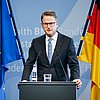
On 27 May, Federal Minister of Health Nina Warken visited Charité University Hospital to discuss with hospital representatives the care of the US citizen currently undergoing treatment there for Ebola he contracted in the Democratic Republic of the Congo. At the request of the US administration, the patient had been taken to the Isolation Ward for Patients with High Consequence Infectious Diseases at Berlin’s Charité University Hospital. His family members were also taken there.
Frequently asked questions
You can find up-to-date information on the May 2026 Ebola outbreak in Africa and on the care of the infected patient at Charité University Hospital in our FAQs.
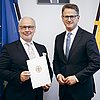
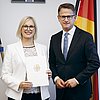
Warken spoke with Charité Chief Executive Officer Prof. Heyo K. Kroemer, the Medical Director of the Department of Infectious Diseases and Critical Care Medicine Prof. Leif Erik Sander as well as Chief Medical Officer Prof. Martin E. Kreis. On behalf of the entire Federal Government, the Minister thanked them and all of the Charité staff who made the care of the Ebola patient possible. She highlighted the good collaboration among all those involved – including the Land administrations in Berlin and Brandenburg, the public health offices responsible, the fire services and the Robert Koch Institute.
The fact that everything ran smoothly at all levels – from the US request for assistance to admission of the patient and his family to Charité University Hospital – makes it abundantly clear that Germany can ensure medical care for highly infectious diseases that is second to none while adhering to the strictest of safety precautions.
Germany has a network of experts across 7 locations for the management and care of patients with high-consequence infectious diseases that can be ready to act at very short notice.
In terms of international cooperation, Warken also emphasised the importance of a World Health Organization that is empowered to act: “No country can manage cross-border health threats alone.” She went on to say that Germany would continue to actively support the WHO reform process and be a reliable partner for international cooperation –politically, financially and in terms of personnel.